Blog

Blog

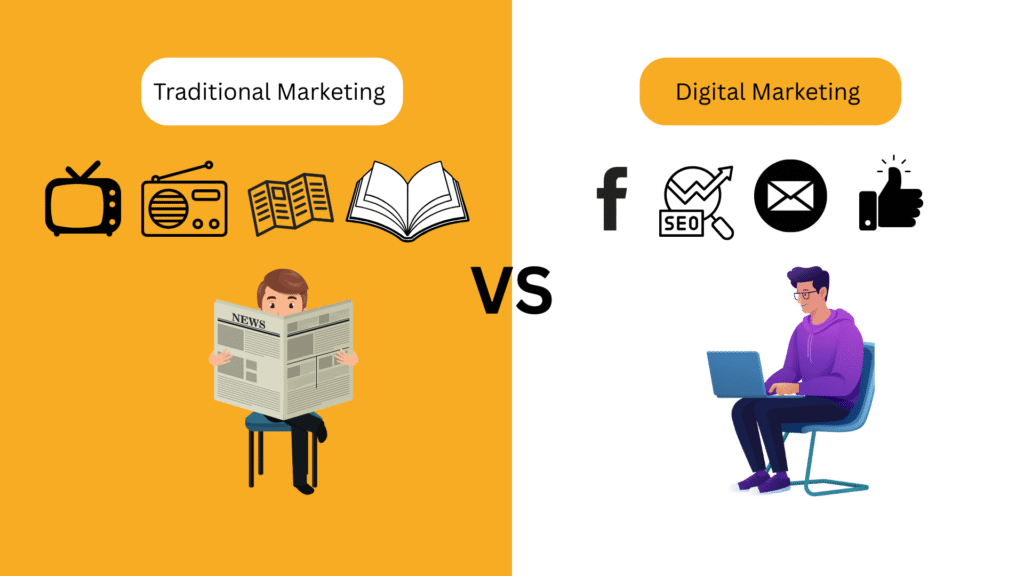
Traditional Vs. Digital Marketing

Key Differences Marketing involves reaching the right people at the right time with the right message. There are two major approaches: traditional marketing and digital marketing. This guide explains the differences, pros and cons, and how to choose the right strategy for your business, helping you decide which approach suits your goals. Business Needs to Focus on In today’s fast-paced world, businesses must decide whether to invest in traditional marketing, digital marketing, or both. Traditional marketing includes offline strategies like TV and radio commercials, newspaper ads, flyers, brochures, billboards, and direct mail. It offers a wider local reach and high credibility, but is expensive, hard to measure, and limited in targeting. Digital marketing uses online platforms like social media, SEO, email campaigns, video marketing, and influencer marketing. It is highly targeted, measurable, scalable, and global. However, it requires technical knowledge and has a short attention span. The right strategy depends on the audience, budget, goals, and resources. A hybrid approach, which combines traditional and digital marketing, is often used by successful businesses. This involves running print ads, promoting local events, and combining billboard awareness with Instagram retargeting. The goal is not to choose one over the other, but to use each where it performs best. What Delivers Better Return on Investment in 2025 ? In 2025, digital marketing is the preferred choice for businesses due to its cost-effectiveness, measurable benefits, and flexibility. It allows for targeted campaigns, real-time tracking, and improved ROI. Despite its advantages, traditional marketing still holds value for reaching less online demographics and building trust. As consumer behavior shifts towards online media, interactive engagement through social media, search engines, and email is a powerful driver of ROI. Digital marketing offers better ROI in 2025 due to its efficiency, adaptability, and data-driven insights. Pros and Cons Traditional Marketing : Pros : Traditional marketing is a powerful tool for businesses to establish trust and build brand recognition within specific communities. Its tangible presence, such as brochures, posters, and magazine ads, makes them more memorable than digital content. Traditional channels also have a wide reach through mass media, gaining credibility among older or less digitally engaged audiences. Local campaigns can be effective, connecting small businesses with customers through flyers, billboards, and community events. Cons : Despite its strengths, traditional marketing has several drawbacks that limit its effectiveness in today’s fast-paced, data-driven world. One of the biggest disadvantages is its high cost—TV commercials, newspaper ads, and billboard placements often require a significant financial investment, making them less accessible for small businesses. Additionally, traditional marketing offers limited targeting options, meaning your message may reach a broad audience, but not necessarily the right one. This lack of precision can lead to wasted resources and lower ROI. Another major challenge is the difficulty in tracking results—unlike digital marketing, it’s hard to measure exactly how many people saw your ad, engaged with it, or made a purchase as a result. Furthermore, traditional campaigns are less flexible; once printed or aired, changes are costly and time-consuming. In a market where quick adaptation is essential, traditional marketing often falls short in responsiveness and optimization. Pros and Cons Digital Marketing : Pros : Digital marketing is highly effective due to its precise audience targeting, cost-effectiveness, real-time tracking, and two-way communication channels. It allows businesses to start small and scale campaigns based on performance, making it ideal for startups and small businesses. With a global reach and adaptability to market trends, digital marketing offers unparalleled flexibility and scalability. Cons : Digital marketing offers numerous benefits but also presents challenges. High competition online makes it difficult to stand out, and managing SEO, analytics, ad campaigns, and multiple platforms can be overwhelming for beginners or small teams. Ad fatigue can lead to users becoming desensitized to repetitive ads, reducing their effectiveness over time. Privacy issues and stricter data regulations can limit effective tracking and targeting. Dependence on technology means that technical issues like website crashes, algorithm changes, or platform updates can suddenly impact visibility and performance, often without warning. Final Thoughts Traditional and digital marketing have distinct strengths and serve different purposes. Traditional marketing provides a tangible presence, while digital marketing offers precision, real-time engagement, and measurable results. The most effective strategy is a blend of both, maximizing impact and driving business success.
Blog

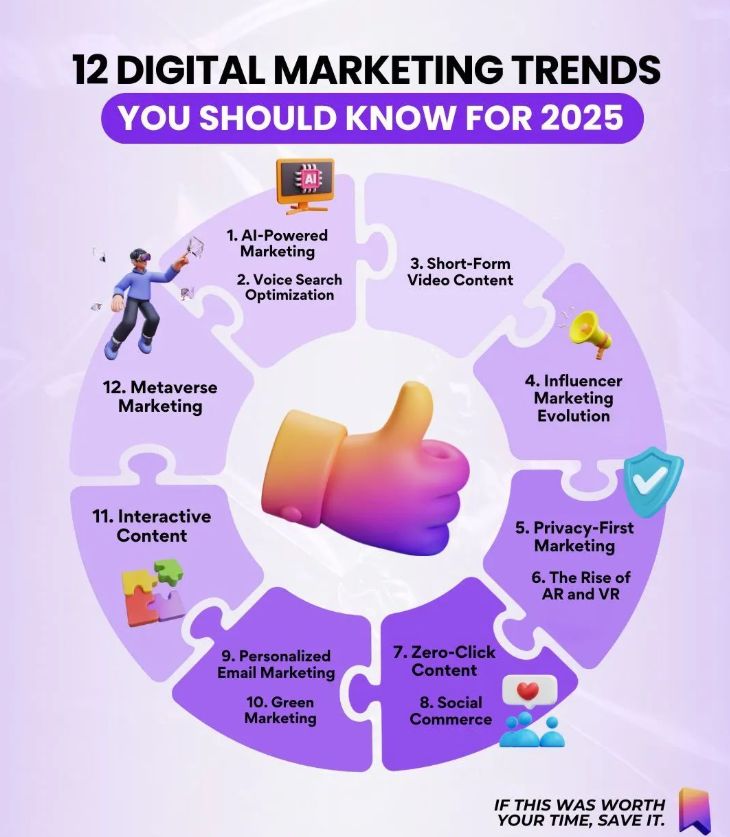
Top Digital Marketing Trends

Meaning : Digital Marketing refers to how businesses utilize the internet to reach customers, inform them about their offerings, and persuade them to make a purchase or take action. AI and generative AI are revolutionizing marketing, with 71% of CMOs planning to invest over $10 million annually. Advertisers are embracing AI for video ads, with AI-generated videos expected to make up 40% of all ads by 2026. Voice search optimization and conversational marketing are also essential for businesses. AR, VR, and immersive brand experiences are enhancing engagement and reducing return rates in retail and beauty sectors. Short-form videos and social commerce dominate, making shopping on platforms seamless and direct. Social media platforms are becoming integrated shopping destinations, enabling brands to connect discovery to conversion through in-app purchases, live commerce, and streamlined checkout experiences. Voice, visual, and AI-first search optimization is becoming a strategic necessity, with brands adapting content for question-based, conversational queries and image SEO. Ethical marketing, data privacy, and first-party data are crucial, with brands prioritizing transparent and ethical marketing strategies. Sustainability and purpose-driven marketing are increasingly attractive to consumers, with messaging rooted in ethics, transparency, and brand values building stronger loyalty and trust. Brands are leaning towards micro and nano influencers for more authentic engagement and niche relevance, while some are shifting focus to direct community-building and offline engagements to reduce reliance on volatile platforms. Immersive technologies are enhancing the shopping and brand experience, such as AR try-ons, VR showrooms, virtual events and ads, and early steps into metaverse branding and in-world experiences. Programmatic advertising and omnichannel experiences are becoming the standard, with AI-powered programmatic advertising delivering real-time ad placements, smart bidding, and better ROI. Quick trends in AI and generative tools include short-form & video commerce, social commerce, voice/visual/AI search, ethics and privacy, sustainability, micro-influencers, immersive technologies, and programmatic and omnichannel marketing strategies. Key Trends AI and automation in marketing are transforming the way businesses operate, with a focus on content creation, predictive analytics, chatbots, and campaign optimization. Social media trends include short-form videos, influencer marketing, and platform-specific strategies. Search engine marketing and SEO are also transforming, with AI-powered search optimization and local and mobile-first SEO. E-commerce and shoppable content are also gaining popularity, with AR/VR in online shopping and livestream shopping. Content marketing trends include interactive and gamified content, AI-generated content, and user-generated content. Data and analytics are also transforming, with first-party vs third-party strategies and marketing performance metrics. Ethics, privacy, and transparency are also crucial, with data privacy and cookie-less advertising strategies being key considerations. Omnichannel marketing involves a consistent brand experience across platforms, integrating CRM with digital channels, and unified customer data platforms. Emerging tech in marketing includes Web3 and blockchain, NFTs, the metaverse, and IoT marketing opportunities. B2B digital marketing trends include account-based marketing, LinkedIn content strategy, lead nurturing via marketing automation, and virtual events and webinars. Thoughts In 2025, digital marketing focuses on understanding audiences, engaging them meaningfully, and adapting in real time. AI at its core ensures personalization is an expectation, and brands that humanize their messages are likely to win.

Blog

What is Digital Marketing ?

Digital marketing is the practice of promoting goods, services, or brands to customers through digital platforms, channels, and technology. It’s a vast field that encompasses a variety of tactics and resources for reaching potential clients online or through electronic devices. Digital marketing is crucial because it enables companies to more effectively and economically reach a wider audience than they could with conventional marketing techniques. The majority of people in today’s digital world spend a lot of time online, whether it be for shopping, social media use, website surfing, or video watching. Digital marketing enables businesses to reach prospective clients online, where they are. The Key Channels of Digital Marketing Search Engine Optimization (SEO) SEO is the process of enhancing a website’s visibility in search engine results for specific keywords related to your business, product, or content, with the aim of increasing organic (unpaid) traffic by making it more visible to users. Purpose : SEO enhances a website’s visibility in search engines, boosting its ranking in search results for relevant topics, thereby increasing website traffic, leads, and sales through organic search. How it Works : Search engines like Google use algorithms to determine which web pages should appear for a specific query, evaluating factors such as relevance, trustworthiness, and user-friendliness. SEO helps align a website with search engine requirements, increasing the likelihood of content ranking highly. Mobile Marketing Meaning : Mobile marketing is a digital strategy that targets users on their mobile devices, promoting products, services, or brands through mobile-optimized content, technologies like SMS, apps, push notifications, mobile-friendly websites, social media ads, and location-based marketing like GPS-triggered offers. Purpose : Mobile marketing aims to connect with users through personalized, timely, and location-aware content, driving engagement and boosting conversions. Utilizing strategies like SMS marketing, mobile apps, push notifications, and location-based services, businesses can provide a seamless, interactive experience, improving customer satisfaction and increasing repeat interactions. Real-time offers and updates are also delivered based on user behavior or location, making communication more effective. How it Works : Mobile marketing is a strategy that delivers marketing messages to users directly on their mobile devices, primarily smartphones and tablets. It uses digital channels like SMS, apps, push notifications, and social media to target the right audience. Marketers identify their target audience based on demographics, interests, device usage, or location, and create optimized content or campaigns for mobile delivery. These messages are concise, visually engaging, and actionable for mobile users. Pay-Per-Click Advertising Pay-Per-Click (PPC) advertising is a digital marketing model where advertisers pay a fee for each click on their ad. It aims to drive targeted traffic to a website quickly, often for leads, sales, or brand awareness. Advertisers bid on specific keywords or audience segments, and when users search for those keywords, ads are shown. PPC is widely used in marketing campaigns for fast results and measurable ROI. Purpose : Pay-Per-Click (PPC) advertising is a method used to generate immediate, targeted traffic to a website or landing page by placing ads in front of users actively searching for specific products or services. It offers fast results by allowing advertisers to bid on keywords and show their ads prominently on search engines, social media platforms, and other digital spaces. PPC provides unparalleled targeting capabilities, allowing advertisers to focus on precise demographics, locations, devices, and user behaviors. It also offers detailed analytics and tracking, allowing marketers to optimize campaigns for better returns. How it Works : Pay-Per-Click (PPC) advertising is a targeted, performance-driven digital marketing model where advertisers create ads and bid on specific keywords or audience segments to display on platforms like Google, Bing, Facebook, or Instagram. The auction system bidding determines the price advertisers pay for each click on their ad. Winning ad placement depends on ad quality, relevance, and user experience, as platforms like Google use a “quality score” to ensure ads match user intent and provide value. Affiliate Marketing Meaning : Affiliate marketing is a performance-based strategy where businesses reward affiliates for driving traffic or sales to their website. Affiliates promote products or services using unique tracking links, earning commissions when customers click on their links. This method expands businesses’ reach without upfront advertising costs, while affiliates generate income by recommending trusted products. It creates a win-win relationship, boosting sales and brand awareness in a cost-effective, results-driven way. Purpose : Affiliate marketing is a cost-effective strategy that allows businesses to expand their reach, increase sales, and build brand awareness by partnering with affiliates who promote their products or services. It operates on a performance-based model, meaning businesses pay commissions when measurable actions are completed, making it a cost-effective strategy for growth without heavy advertising budgets. Affiliates can monetize their platforms by recommending relevant products to their audience, earning passive income through commissions. It helps businesses tap into niche markets and fosters trust by incentivizing authentic content and targeted traffic. How it Works : Affiliate marketing is a powerful process that connects businesses with affiliates who promote their products or services in exchange for commissions. Merchants set up affiliate programs and provide unique tracking links or codes to affiliates, who use their platforms to share the merchant’s offerings. When a user clicks on a link, the affiliate’s tracking link records the conversion, and the merchant verifies the action. Affiliate networks or software platforms facilitate tracking, reporting, and payment, benefiting all parties. Success depends on affiliates building trust and promoting products authentically. Email Marketing Meaning : Email marketing is a digital strategy that sends targeted messages to customers, helping businesses build relationships, nurture leads, promote products, and encourage repeat sales. It’s cost-efficient, measurable, and offers insights like open rates and click-through rates, allowing businesses to refine campaigns and improve performance over time. Purpose : Email marketing focuses on creating personalized communication with a target audience to drive engagement, loyalty, and sales. It delivers timely content, nurtures leads, and guides prospects through the sales funnel. It allows segmentation based on behavior, preferences, or demographics, improving customer experience and response rates. It also provides valuable insights

Scroll to Top