
Artificial Intelligence (AI) is a true game-changer in the field of digital marketing and is no longer just a trendy term. By 2025, AI-powered marketing firms will be more productive, efficient, and successful. AI can help you save time and get better outcomes whether you are in charge of client communications, SEO, advertisements, or content management.
1. Content & Copywriting
Content and copywriting tools like Jasper AI, Copy.ai, and Writer.com are essential for agencies managing multiple clients. Jasper AI is advanced and suitable for long-form content and marketing copy, while Copy.ai focuses on short-form content and offers templates for agencies to reuse. Writer.com helps maintain a consistent tone and supports collaboration across the team, making it a valuable tool for agencies.
2. SEO and Optimization
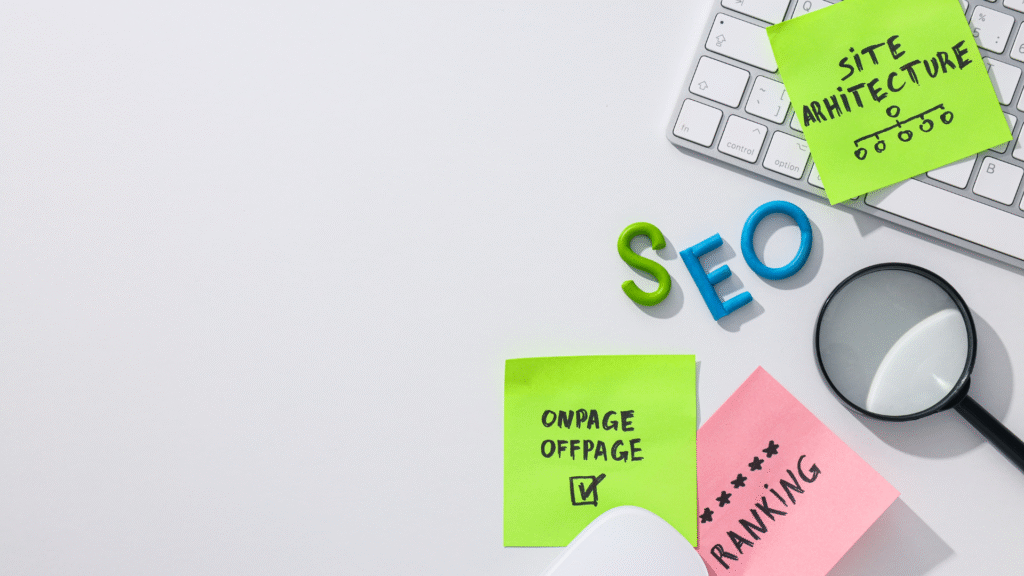
AI tools are essential for agencies to help clients rank higher in searches. Surfer SEO is a popular tool for content optimization, analyzing over 500 signals to improve ranking. SEMrush AI, with its AI features, aids in keyword research, competitor analysis, and PPC suggestions. Brandwatch and social listening tools help understand online sentiment, trends, and potential crises
3. Creative and Visuals
Canva, AdCreative.ai, and Synthesia are tools that simplify visual content creation for ad campaigns, social media, and videos. Canva offers design generation, video edits, and brand-kit matches, while AdCreative.ai generates multiple ad creative variations for testing and iteration. Synthesia allows for video creation with avatars, voiceovers, and multiple languages without filming.
4. Automation and Workflows
These tools facilitate internal operations, automate repetitive chores, and link systems.
Although not strictly “AI,” Zapier and Make (previously Integromat) enable you to automate multi-step processes (e.g., when a form is submitted, generate content, schedule publish, send report) when paired with AI triggers.
Aurora, also known as agency-oriented AI workspaces
These kinds of tools help the team manage knowledge and workflow, automate procedures, and centralize documents.
Aurora: Redesign
Predis.ai
Auto-posting, content calendars, ad creative generation, and scheduling are very helpful in social media management. It works nicely with agency processes because it was designed with agencies and marketers in mind.
5. Reporting and Analytics
Customers frequently demand thorough reports. These tools facilitate the collection, visualization, and automation of client reports.
AI-powered reporting dashboards such as AgencyAnalytics, Oviond, and others
These solutions provide customized, branded reports in a matter of minutes by extracting data from several platforms, such as Facebook Ads and Google Analytics. Numerous organizations claim to use these to save five to ten or more hours every week.
Otterly.ai
helpful for ensuring client content is present in AI contexts by tracking how it shows up in AI-generated search results or responses.
How to Choose & Combine Tools
Fit and integration are more important when selecting the “best” tool than just functionality. Here are some pointers:
a) Start with the essential needs: Consider your primary bottlenecks (design, reporting, or content) and start there.
b) Verify integrations: You can reduce friction by using a solution that integrates with your internal tools, ad platforms, CRM, or CMS.
c) Customization and brand voice: Make sure the tool allows for customization so that outputs reflect the unique brand style of each client.
d) Collaboration features: Support for numerous users, feedback, versioning, etc., is essential for agency teams.
e) Before committing, test the tool’s suitability for your team through trials or pilot projects.
f) AI is a force multiplier, not a substitute, thus combine humans and AI. Review, improve, and offer a human touch at all times.
Challenges & Considerations
Despite the strength of AI tools, agencies should remember:
a) Quality control: AI frequently makes claims that seem correct but aren’t. Verify facts at all times.
b) Plagiarism and originality: To steer clear of copyrighted or duplicate information, use programs that check for originality.
c) Data privacy and compliance: Make sure sensitive information and client data are safe; watch what prompts you provide.
d) Client expectations: Don’t oversell AI as completely “automatic genius”; instead, be open and honest with clients regarding its use.
e) Tool weariness and switching expenses: An excessive number of tools causes mayhem. Select fewer, well-thought-out options.
Conclusion
It is dangerous to be an agency that opposes AI in 2025. Developing into an AI-savvy agency is the better course of action. Whether it’s for writing, graphics, SEO, automation, or reporting, the tools listed above are among the greatest options available.
The way you build your stack and leverage AI to enhance human strengths—creativity, strategy, empathy, and subject knowledge—is what counts most.
Final Thoughts
AI marketing tools are revolutionizing business strategies in 2025 by automating repetitive tasks and providing deeper insights through predictive analytics. These tools enable marketers to focus on creativity and results, enhancing efficiency and gaining a competitive edge in personalization, targeting, and ROI optimization. Adopting AI-driven marketing is not just a trend but a key to staying ahead in the increasingly data-driven digital landscape.